The first warm day in May, you turn the heat pump to cool, and a damp, sock-drawer smell rolls out of the unit for the first thirty seconds. Half the customers who call us think the unit is broken. It's not. It's almost always one of three things.
1. The filters went back in wet
This is the most common cause and the easiest to rule out. If you've recently rinsed the filters and didn't let them dry fully, they hold moisture. When the fan starts, you're blowing warm, slightly damp air through a closed unit into the room. That's the smell.
Fix: Pull the filters out. Let them dry on a flat towel for at least an hour. Run the unit on fan-only for ten minutes with the filters out (door closed). Put them back when both are completely dry. Smell should be gone for now.
2. The drain pan has a film on it
Under the cooling coil there's a shallow plastic tray called the drain pan. When the unit cools, condensation drips into this pan and exits through a small hose to the outside. Over time, a thin biofilm builds up in the pan — the same kind of slick that forms on a forgotten flower vase. It's harmless but it smells exactly like the smell people describe.
You usually can't see this without opening the unit further than a homeowner should. But you can sometimes wipe the visible edge of the drain pan with a damp cloth, dried thoroughly, and notice the smell ease.
3. The blower wheel is genuinely dirty
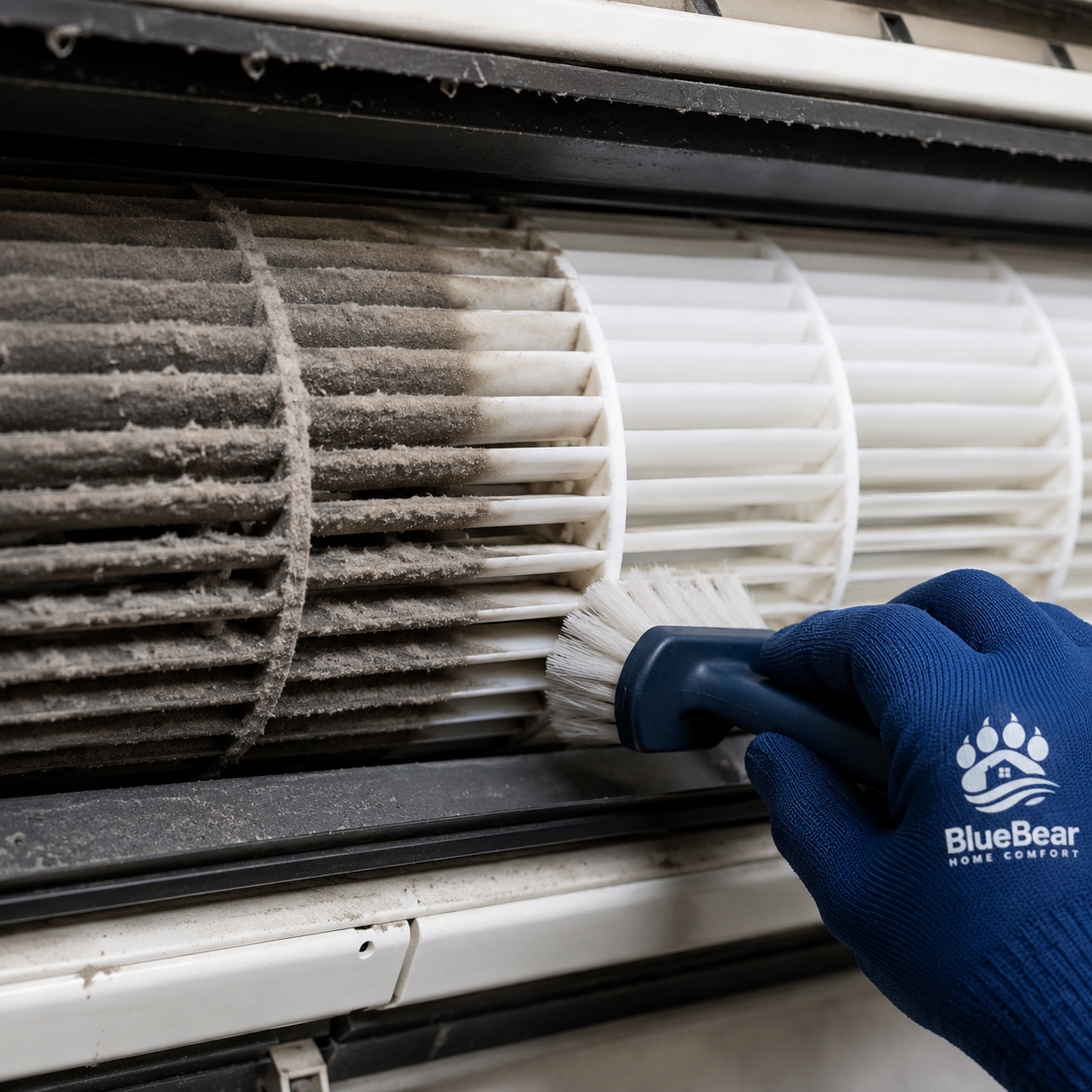
This is the one that needs a real cleaning. The blower wheel is the cylinder that spins inside the unit and pushes air into your room. Every cubic foot of air your unit moves goes past this wheel — and over months and years, dust, pet hair, pollen, and kitchen vapour build up on its blades.
A heavily-coated blower wheel smells like a damp basement. It also moves significantly less air than a clean one, which means your unit cycles longer to do the same work.
How to tell which one you have
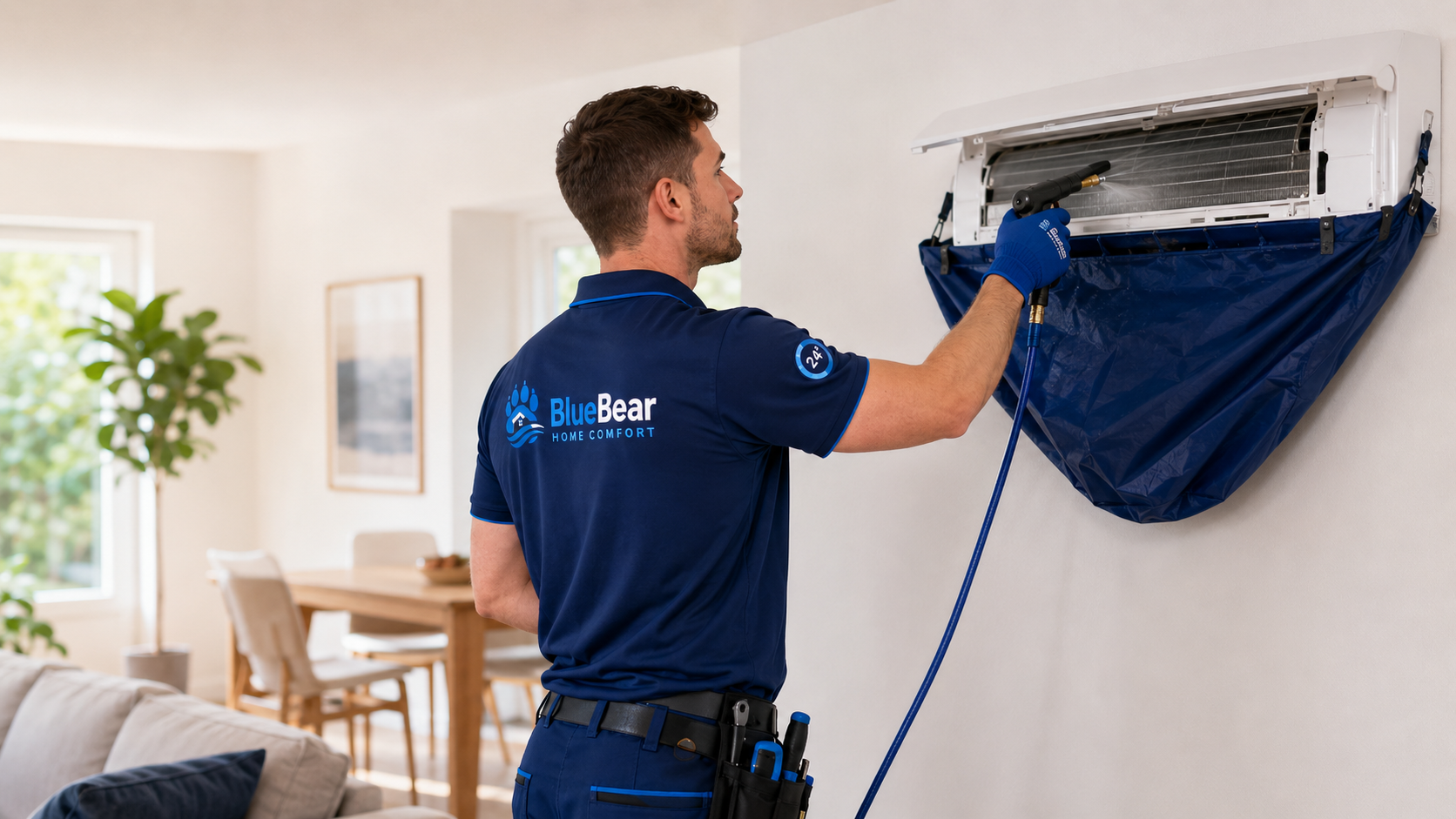
Try the dry-filter test first. If the smell comes back within a week of fresh-dry filters, it's probably the drain pan or blower wheel — and that's what a BlueBear cleaning handles. We collect the runoff cleanly, wash the coil and wheel, and clear the drain line at the same time.
A note on what not to do
Please don't spray bleach, vinegar, or essential oils into your indoor unit. We get this question a lot, and the answer is no.
- Bleach damages the coil's aluminum fins over time.
- Vinegar is mild enough that it doesn't really clean — but it does etch some plastics if you use it consistently.
- Essential oils coat the wheel and accelerate the buildup that caused the smell in the first place.
Air fresheners that clip onto the unit have the same problem. They don't make a unit cleaner. They make a slightly dirtier unit smell like a different thing.
The honest summary
A musty heat pump usually isn't a sick heat pump. It's a heat pump that's done its job — caught a lot of stuff — and is now holding onto it. Dry your filters, check whether the smell comes back, and call us if it does. A proper wash takes about 60–90 minutes and you'll know the difference within the first run.