Nova Scotia winters are exactly the wrong kind of cold for a heat pump that hasn't been looked after. Not because heat pumps can't handle the cold — modern ones absolutely can — but because the cold is when small problems become big ones quickly. Here's a tight prep list we'd run at our own homes.
1. Rinse your filters before the cold sets in
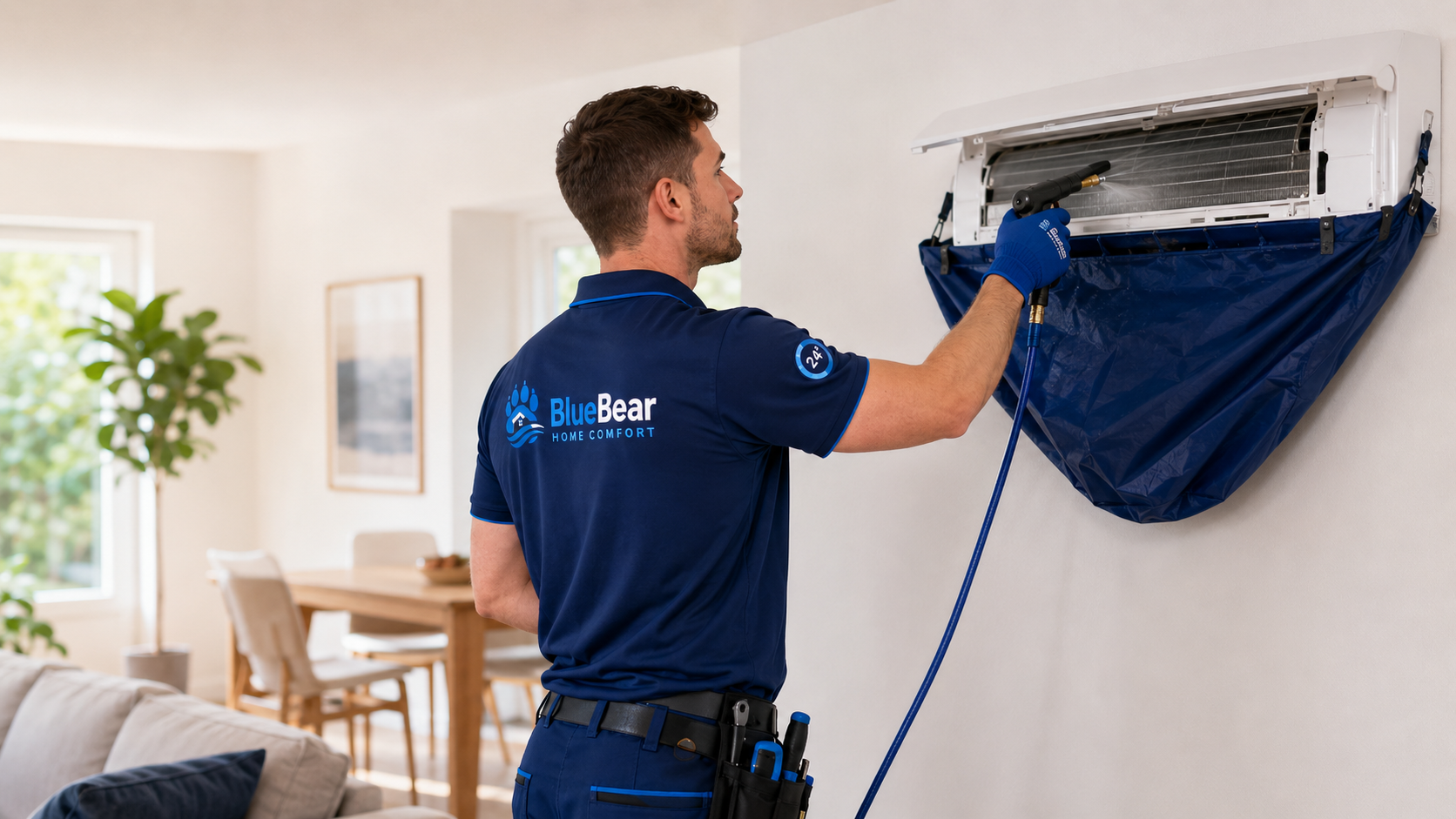
Through summer your unit ran on cool, which dehumidifies and collects pollen and pet dander on the filter. Going into winter, those filters are at their dirtiest — and a clogged filter makes the unit work harder right when it's also fighting cold air. Two minutes, under the tap, dry, back in. (See our full filter guide if you've never done it.)
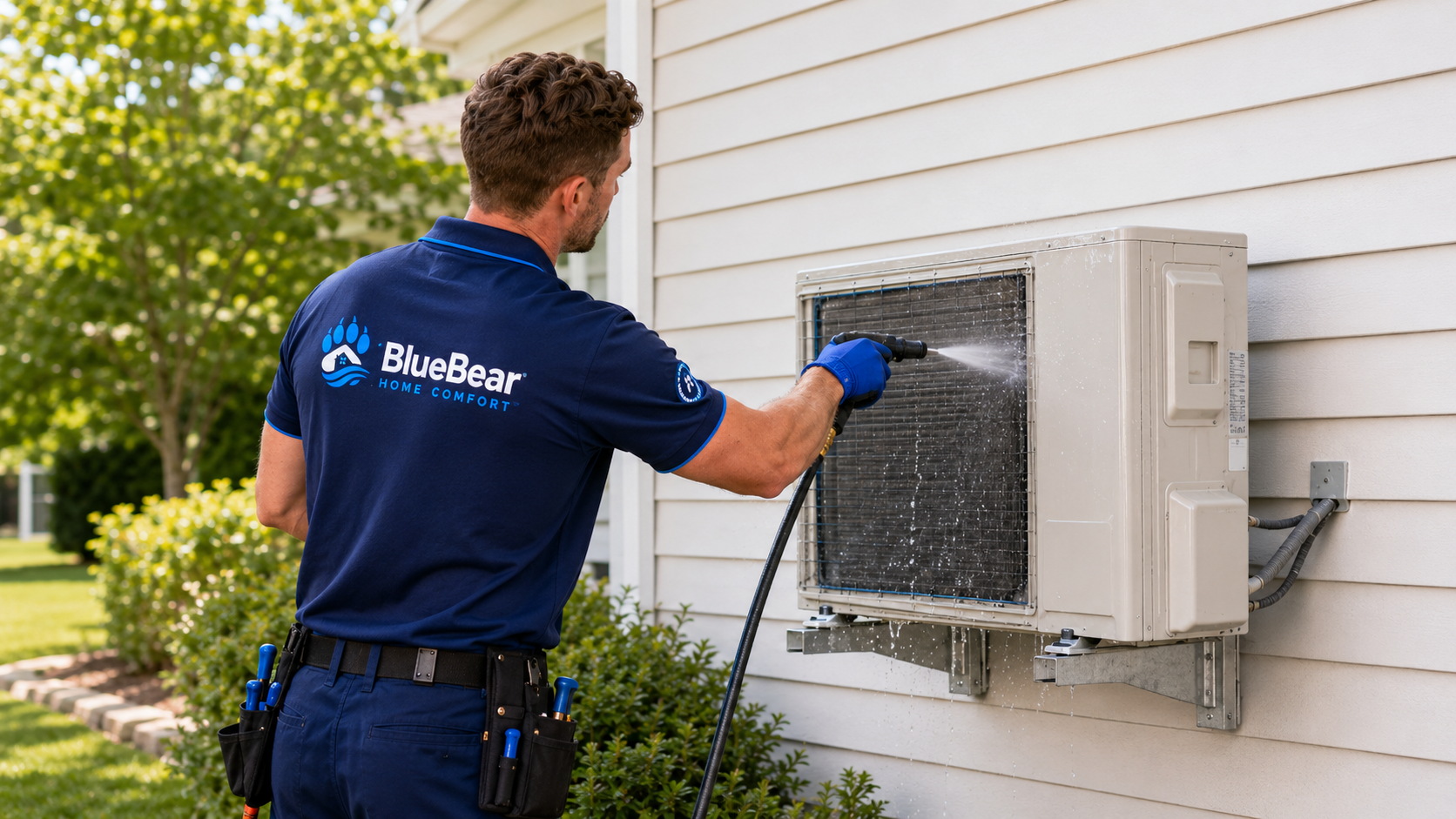
2. Clear a clean perimeter around the outdoor unit
Walk around the back or side of the house to wherever the outdoor unit lives. You want:
- At least 60 cm of clear space on all sides — no leaves, no garbage cans, no tarps, no firewood
- The top free of debris — fallen leaves are the worst offender
- The drain area below the unit clear — that's where defrost meltwater needs to go
You don't need to clean the outdoor unit itself this time of year (that's a spring job). You just need air to be able to move through it.
3. Don't cover the outdoor unit
This is the most common mistake we see. People put a fitted cover on the outdoor unit for the winter, the way you'd cover a barbecue. Don't.
Your heat pump runs year-round. The outdoor unit is designed to sit outside in snow, ice, and rain. Covering it traps moisture against the coil, encourages corrosion, and stops the fan from moving air. If you're worried about icicles forming from the eavestrough above it, install a small ledge or shield over the unit (with airflow on all sides), not on it.
4. Test the heat before you need it
On the first cool morning — well before the first hard frost — set the unit to heat at 22°C and let it run for fifteen minutes. You're checking three things:
- Air coming out is genuinely warm within a couple of minutes
- No new noises from either the indoor or outdoor unit
- No error codes appear on the remote
If anything's off, you have a few weeks of mild weather to sort it. Finding it on the first -15°C night is much worse.
5. One mistake nobody tells you about
When the temperature drops suddenly, the instinct is to crank the thermostat up to 26°C to "catch up" faster. This doesn't actually make your home warm faster. A heat pump heats at the same rate regardless of how high you set it. The only thing cranking does is make the unit run longer and use more electricity to overshoot your real comfort temperature.
Set the temperature to what you actually want. Let it get there. That's it.
About the defrost cycle
If your heat pump occasionally runs the outdoor fan in reverse, or stops blowing warm air for a few minutes and you see steam coming off the outdoor unit, don't panic. That's the defrost cycle. It's normal in cold and damp conditions, it lasts a few minutes, and it's how the unit melts frost off its own coil. If it's running defrost constantly, that's worth a call.
Heat pumps handle Nova Scotia winters fine. A little prep now means you won't be the one calling someone in a panic on the coldest night of the year.