If you live with a shedding pet, or your spring allergies are bad enough that you notice them indoors, your heat pump is doing more than just heating and cooling your home — it's quietly acting as a giant air filter. Every cubic foot of air in your living room is being pulled past those mesh filters and that coil dozens of times a day.
That's good. It means cleaner air for you. It also means your unit gathers a lot more in a year than it does in a pet-free home — and the rhythm of "clean it every 18 months" doesn't really apply to you.
Why pets and allergies change the math
A standard mesh filter is designed to catch large particles: visible dust, hair, lint, pet dander aggregates. It's not a HEPA filter. (We'll get to that in a minute.) In a home with a shedding cat or dog, the filter clogs roughly 2–3× faster than in a pet-free home.
What that looks like in practice: a filter that would last six weeks in a pet-free home looks dusty after about two in a pet home. If you can't see daylight clearly through the mesh, it's clogged enough to be costing you airflow.
A rhythm that actually works
For most pet-and-allergy homes, this is the cadence we recommend:
- Filter rinse every 2–3 weeks during shedding seasons (spring + fall). Every 4 weeks the rest of the year.
- Deep clean twice a year: once in early spring (before pollen kicks in) and once in late fall (before heavy heating use).
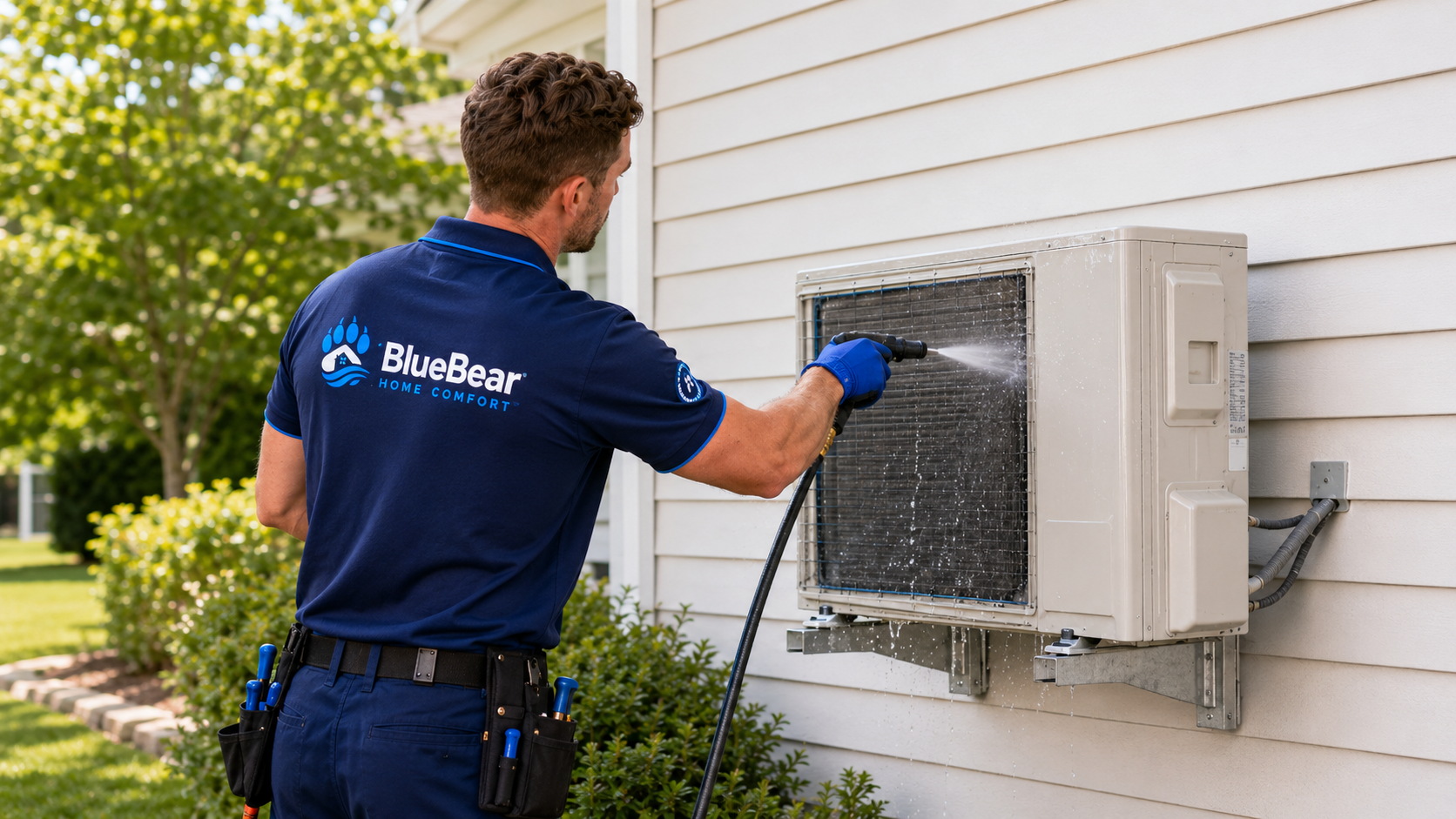
- Vacuum around the outdoor unit weekly during high-shed months — fur and grass clippings collect in the fins surprisingly fast.
Sounds like a lot. In practice, the indoor filter rinse takes two minutes, and you'll genuinely notice the difference in airflow and smell.
The HEPA filter question
We get asked this often: "Can I replace the mesh filter with a HEPA filter?" The short answer is no, and not for the reason you'd expect.
HEPA filters are denser — they catch much smaller particles, which is great for allergies. But that density also means more resistance to airflow. A ductless head's fan motor is not sized to push air through a HEPA filter. If you install one, you'll get cleaner air for a few weeks until the motor is straining and the coil is overworking. The unit will use more electricity, run longer, and wear out faster.
Some units have an accessory slot for an aftermarket pleated insert. That's a different product and it's fine. But don't swap the main mesh filter for HEPA.
The better answer for allergies
If indoor air quality is the real goal, a separate standalone HEPA air purifier in the bedroom does a much better job than trying to convert your heat pump into one. Keep the heat pump doing what it's designed to do — heating, cooling, and capturing the big stuff — and let the purifier handle the small stuff.
One thing to check after a heavy shed
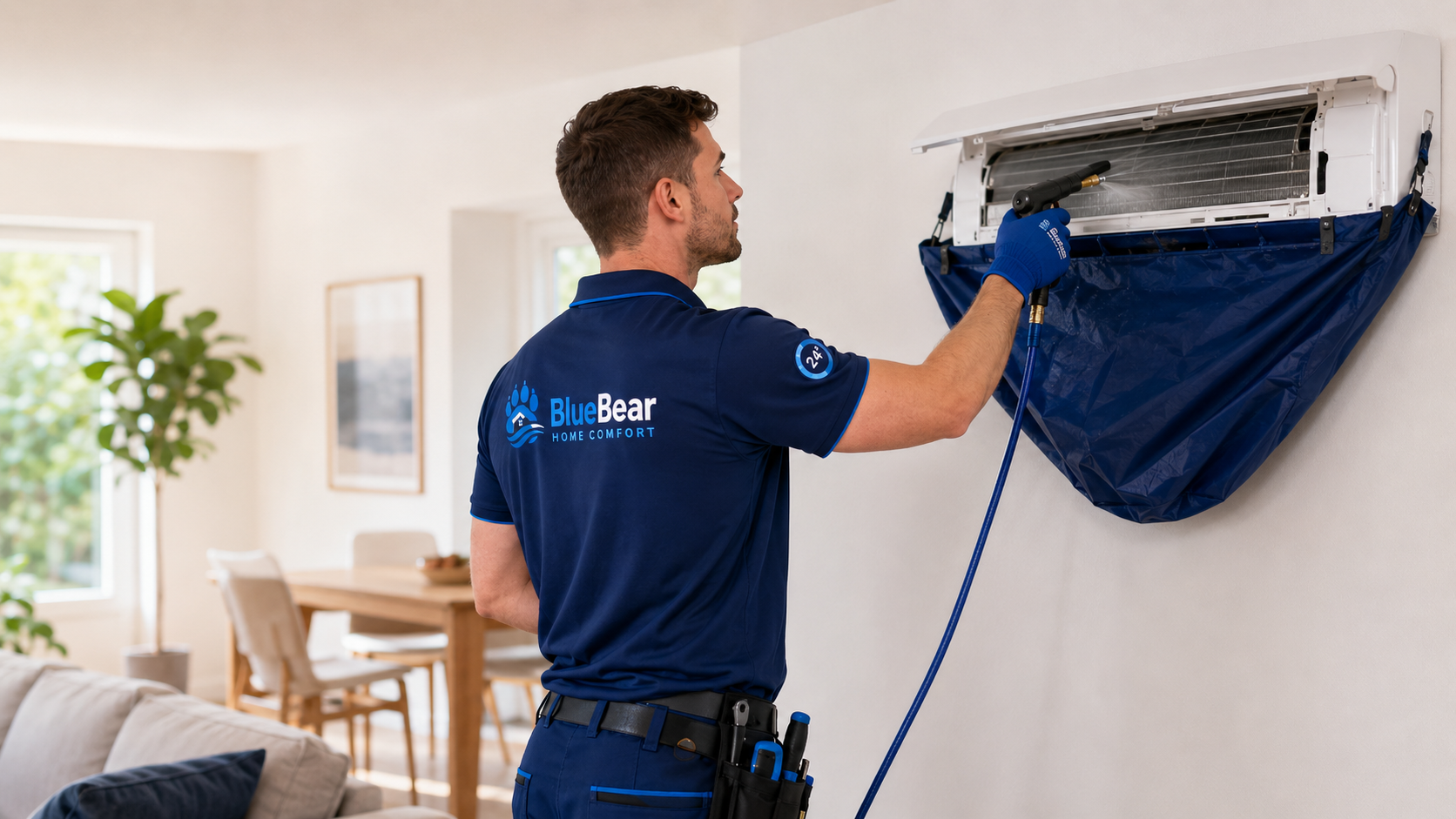
If your cat or dog has just gone through a major coat blow (those long-haired German Shepherds in May, looking at you), open the front cover of the indoor unit and look at the louvres and vanes — the angled plastic slats inside.
If you can see hair wrapped around them, give them a wipe with a slightly damp microfibre cloth. This isn't a deep clean; it just keeps the visible fur from getting drawn deeper into the wheel. Five minutes of homeowner time saves us thirty minutes on our next visit.
A clean unit isn't a fussy thing — it's a small habit that fits into how you already live with your pets. Stay on filters, do two deep cleans a year, and your home keeps breathing easy.